
Basic Income: what is it and how can it help?
/Basic Income: what is it and how can it help?
By Nancy Greene-Gregoire, member of a Montreal working group on Basic Income
(excerpt from Anglican Montreal June, 2021)

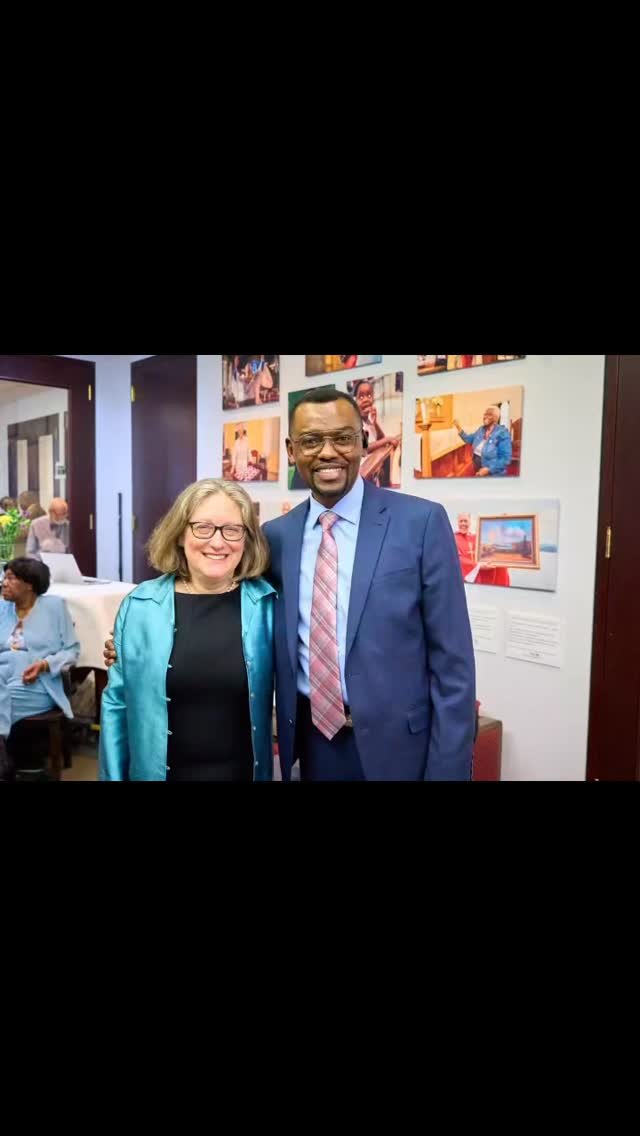
After church on April 11, the Cathedral’s Ecological and Social Justice Action Group (ESJAG), teamed up with a local working group (Nancy Greene-Gregoire, Rev. Deacon Peter Huish, Terri Burman and Caroline Jondahl), and invited Sheila Regehr, co-chair of Basic Income Canada Network https://basicincomecanada.org/ to talk to us about basic income.
When the pandemic threw so many people out of work in March 2020, the Canadian Emergency Response Benefit (CERB) kicked in quickly. As a result, we have seen the social and economic advantages of providing a basic income for so many people.
Yet those on social assistance have not received anything extra. Instead, they face intrusive conditions for assistance that must be met, never have enough to cover more than the bare minimum needed to survive, and are discouraged from making any income since it results in an immediate drop in benefits and a lag in benefits if the income is not sustained.
Studies show that when Basic Income is implemented, mental health improves, visits to emergency rooms are reduced, crime is reduced, and people remain motivated to work. Employers like it because healthy employees are better workers and turnover isn’t as high. Recipients like it because they can take the time to retrain if needed and find a job they can commit to keeping.
At the event on April 11th, Sheila brought us up to date on Federal initiatives.
Bill C-273 requires Finance Minister Chrystia Freeland to create a national strategy for a Guaranteed Basic Income, including potential partnerships with provinces to determine how best to structure and implement a Basic Income. You can register your support for the bill here: https://www.ubiworks.ca/basicincomebill.
Since Sheila talked with us, NDP Leah Gazan’s Motion 46, which calls for the CERB to be converted into a permanent Guaranteed Livable Basic Income, (https://www.leahgazan.ca/basicincome) didn’t pass but it had widespread support and will contribute to the growing momentum of the movement (https://www.leahgazan.ca/statement_from_leah_gazan_on_motion_46).
Our Diocese has prepared templates for communication to both Federal MPs and Quebec MNAs: https://www.montreal.anglican.ca/social-justice
The recent report from British Columbia (https://bcbasicincomepanel.ca/) showed that provinces cannot do this alone: they need the backing of the Federal government.
Sheila suggested we could advocate for basic income by contacting our local municipal representatives since cities reap the benefits of a population receiving basic income. Why not take a moment and write to the Mayor of Montreal https://mairesse.montreal.ca/en/send-message-mayor ?
People had more questions when the live session ended, and Sheila answered them by email:
Does the Basic Income Network advocate for a specific model of UBI? If so, what are the details of that model?
Sheila Regehr: Yes, we do. People can find everything we have to say about different models and what matters most in a report (https://www.basicincomecanada.org/policy_options ) we released just as COVID was hitting Canadian shores in January 2020.
There are three designed, costed and funded options in the report. We did not try to design an ideal but rather to show governments they have options. Option 1 is for 18-64 year olds and Option 2 includes seniors. Both are based on the same kind of model of current income guarantees for seniors and children where benefits gradually reduce as other income increases. Option 3 is the full, individualized Universal Basic Income (UBI) where the same amount goes to everyone.
After CERB was introduced and the pandemic was raging, BICN made a decision to declare a preferred option for government in the interest of saving lives and preserving well-being: That’s Option 1 focused on 18-64 year olds, at the level of CERB’s $2000 per month which, adjusted for inflation, is very close to our benefit level of $22K per year (in 2017 dollars). We were very happy to see the government recognize that this was a reasonable dollar amount for people to try to get by on and that they recognized the importance of cash delivered rapidly. Other elements of CERB design, however, involve conditions and penalties for employment, which mean that it is not a basic income.
Are there any models that show how much money people would receive for Basic Income and the policy for reducing it as people earn income on top of Basic Income?
SR: As you’ll see in the report, we chose a benefit reduction rate of 40%. We debated this for a long time and wanted to ensure that the benefit reduction was more gradual than other models we’d seen (for example the Ontario pilot rate was 50% and this Ontario formula is what the Parliamentary Budget Office has costed out). Our more gradual rate assures that people benefit well up into the middle income brackets to provide more security. Our funding sources ensure that higher income earners are the ones who pay a fairer share of the cost of the program, especially the very wealthy.
What research is there on the effects of UBI on the environmental crisis we face? For example, less deforestation in Indonesia, more people engaged in environmental activism, less need to promote environmentally destructive industries (e.g. manufacturing unneeded items to keep people employed and fuel the economy), less short term budgeting leading to low quality, soon to be replaced purchases, healthier and also more ecological food choices, avoidance of environmentally destructive jobs, etc.
SR: These questions about the environmental/basic income intersection are great and I don’t have direct answers to them. But they are most welcome and certainly timely so many thanks to the person who raised them. BICN is working with The Energy Mix (https://theenergymix.com/ ) and other partners on a project this year to bring people together in different kinds of communities across Canada to discuss these very issues and report to government on our findings.
You can watch the March 11 talk with Sheila Regehr on the Cathedral YouTube channel: https://youtu.be/osgweRWUjLg
More resources:
Recent brief to the Standing Senate Committee on Social Affairs, Science and Technology, by Sheila Regehr https://d3n8a8pro7vhmx.cloudfront.net/bicn/pages/118/attachments/original/1591308343/SOCI_BasicIncomeCanadaNetwork_e.pdf?1591308343
Patriotic Millionaires, web site https://patrioticmillionaires.org/about/
Should Canada adopt universal basic income?, Interview with Wayne Lewchuck of McMaster University, April 10, 2021, https://www.youtube.com/watch?v=SXYyw--YIuU
The Case for Basic Income: Freedom, Security, Justice, by Jamie Swift, Elaine Power, available at BTL Books https://btlbooks.com
Basic Income for Canadians: From the COVID-19 Emergency to Financial Security for All, by Evelyn L. Forget