Forum for Leaders of Children, Youth and Family Ministry is back!

We are back for another series of online Forums dedicated to supporting ministry to children, youth and families.

We gather from the convenience of your home or office at noon. Bring your lunch and be a part of a small, supportive community of leaders, allies and enthusiasts! The vibe is relaxed and there is no pressure to participate.

Our discussion will emphasize Indigenous Reconciliation. We will have guests Karyn Wahsontiiostha Murray who will be addressing the topic of Indigenous reconciliation and Karen Luyendyk who will share more about the importance of our upcoming Mapping Exercise.

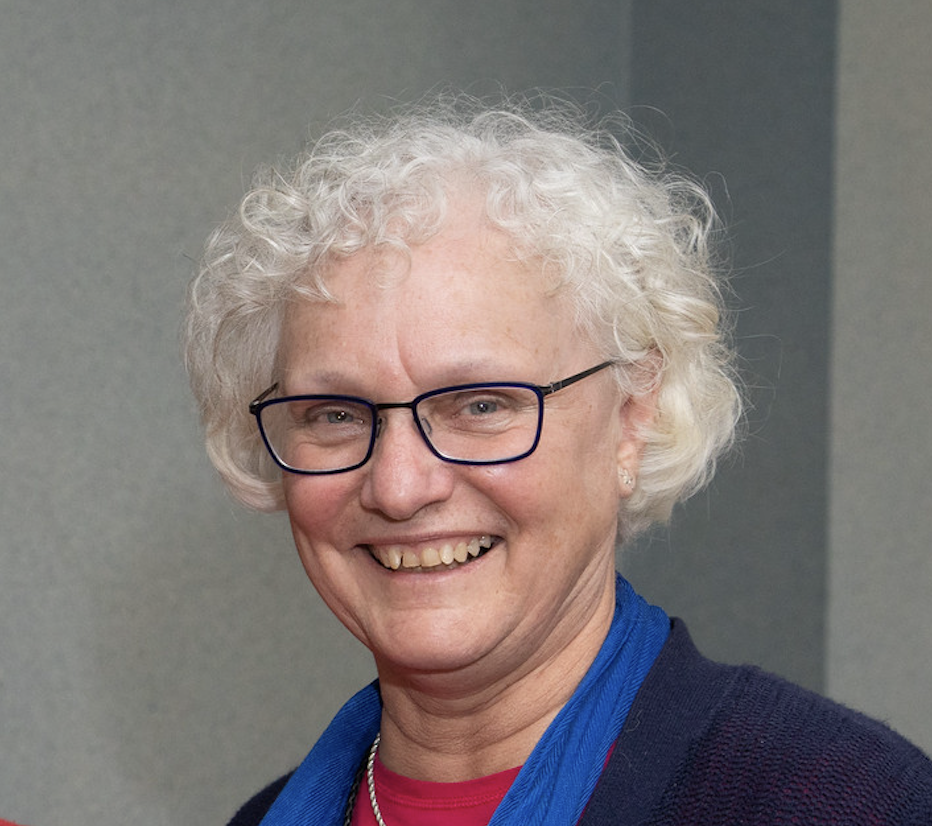
Karen Luyendyk (she/her) currently co-leads the All My Relations Panel for the Anglican Diocese of Ottawa and has been an Alongside Hope Mapping The Ground We Stand On facilitator since 2020.

Karyn Wahsontiiostha Murray is founder of Gardens of Hope Kanehsatake and will share some insights on the work of Indigenous Reconciliation

Thursday, September 10th at noon

click here to join / contact Lee-Ann with questions


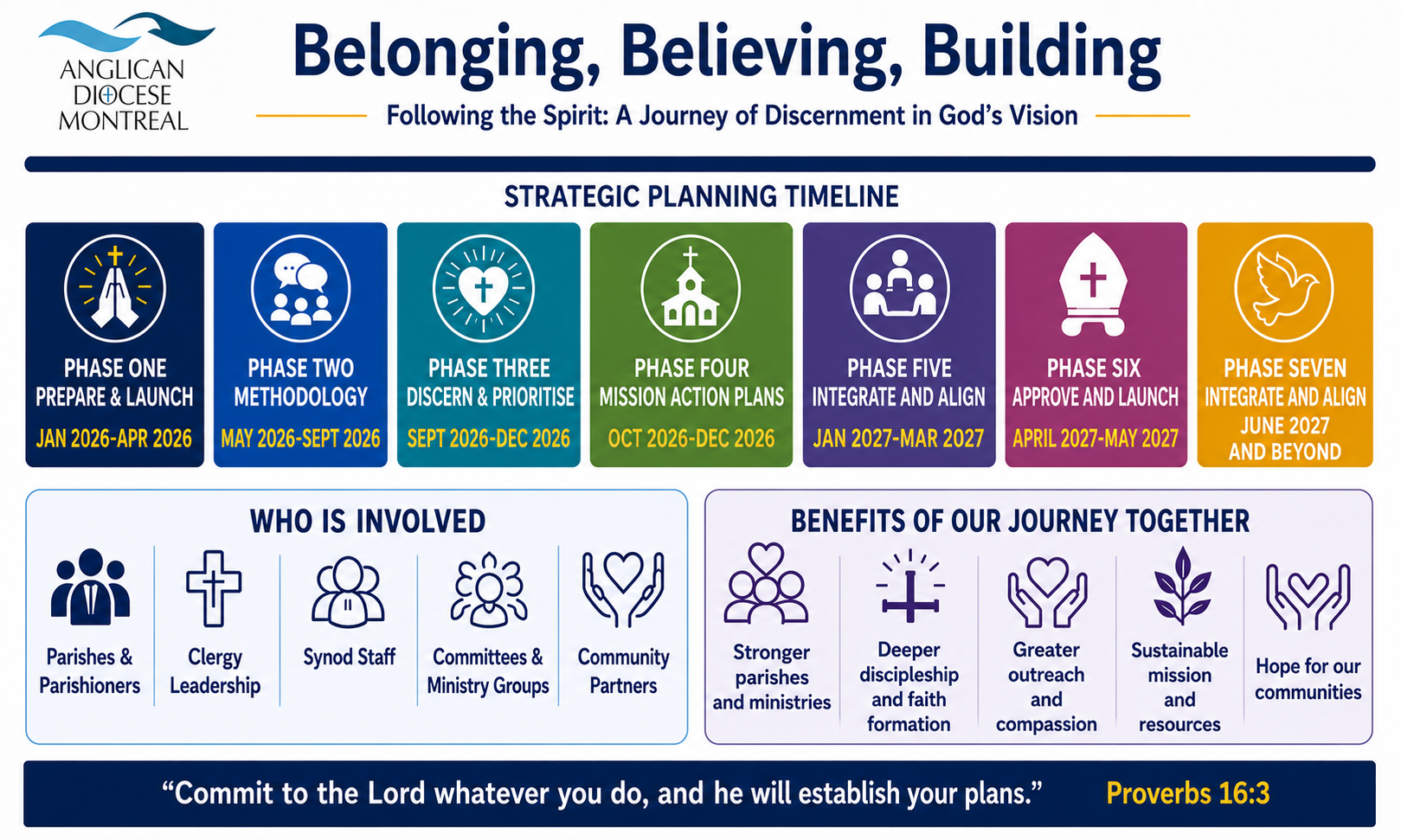
Beginning the Journey: A Strategic Planning Process for the Diocese by The Rev Deacon Jessica Bickford (as published in Anglican Montreal September 2026)

Beginning the Journey: A Strategic Planning Process for the Diocese by The Rev Deacon Jessica Bickford (as published in Anglican Montreal September 2026)

 When I was seven years old, my mother and I set off on a memorable adventure, travelling by train from Calgary to London, Ontario, where we met my uncle’s family before piling into their station wagon for the drive to Montreal to attend my aunt’s wedding.

It was a different era. Air conditioning meant keeping the windows rolled down, the latest hits played on the radio or eight-track player, and my cousin and I sat in the back of the station wagon to keep the peace. Tucked into the driver’s door was an essential travelling companion—the large yellow MapArt road map. It only appeared once, during a “stop for gas,” but that was enough. For the rest of the journey, my aunt happily reminded my uncle that she had known the correct route all along. To his credit, he accepted it with remarkable patience.

In many ways, the Diocese’s strategic planning process feels like that family road trip. Some travellers are eager to begin, excited about what lies ahead. Others approach the journey with questions or uncertainty, while some are simply ready to travel with the group. Regardless of where we find ourselves, we are setting out together. There will be unexpected turns, important conversations, and moments of disagreement. Yet when we arrive at our destination, we hope to celebrate a stronger, more connected diocesan family, better equipped for God’s mission.

The Journey Begins

Guiding this process is the Strategic Planning Committee, consisting of the Bishop, the Rev Jessica Bickford, Phil Castonguay, Fiona Crossling, the Rev Emmanuel St Hilaire, John Kirby and the Rev Debbie Noonan.

Since January, the committee has reviewed two decades of strategic planning archives, annual parish statistics, and planning models from other dioceses. With Bishop Victor-David’s participation and approval, the committee has developed a process that reflects both the realities we face today and the hopes we hold for the future.

A Grassroots Approach

Historically within the Diocese of Montreal, strategic planning has followed a somewhat top-down model, where representative groups provide input that committees analyze before presenting a final plan. While this approach has value, it does not always capture the full diversity of voices and experiences across the Diocese.

The 2026 Strategic Planning Process is recommending an approach that places parishes at the centre and broadens participation beyond formal representatives. The goal is to engage as many of the Diocese’s 5,464 stakeholders as possible—including clergy, parish leaders, parishioners, Synod staff, and ministry partners across five archdeaconries, eight deaneries, and 63 parishes.

By expanding participation, we create greater opportunities to listen, discern together, and remain attentive to the movement of the Holy Spirit as we seek God’s direction for the Diocese.

 Phase One: Plotting a Course —Parish Mission Action Plans

Most people would agree that today’s Church looks different from the one many of us grew up in. Most churches are no longer at the centre of community life, and many parishes are experiencing fewer volunteers and limited financial resources. Yet these challenges provide an opportunity to rediscover what it means to be a vibrant spiritual community rooted in our neighbourhoods.

One question raised at the 2025 Diocesan Synod was: “How will parishes benefit from this strategic planning process?”

The first phase of the 2026 strategic planning process directly addresses this question. Every parish will receive a resource package designed to guide them in the creation of a Mission Action Plan (MAP). Rather than becoming another administrative task, the MAP is intended to help each parish prayerfully reflect on its identity, gifts, challenges, and future ministry.

Each parish resource package will include:

Parish data and key indicators;

Reflections on the parish’s relationship with God and the reasons members participate in its ministry;

Tools to identify mission, core values, ministry strengths, and partnerships;

A methodology for conducting a community resource inventory;

Resources for setting and evaluating future priorities and goals.

The committee recommends completing this work through a parish visioning day or a series of parish gatherings. Some parishes may already be engaged in strategic planning. The MAP process is intended to complement those efforts while ensuring consistent information is gathered across the Diocese.

By collecting Mission Action Plans from every parish, we will gain a clearer picture of the ministry and mission already taking place. This understanding will allow diocesan programs, resources, and structures to better support ministry at the grassroots level.

 Listening to Parish Leaders, Clergy, and Staff

 In Acts 20:28, Paul reminds the church: “Keep watch over yourselves and all the flock of which the Holy Spirit has made you overseers.” This passage highlights that leadership involves not only caring for others but also attending to the spiritual health and well-being of those who serve.

Recognizing the importance of healthy leadership, the Strategic Planning Committee has identified clergy, lay leaders, and Synod staff as key stakeholders in this process.

We will distribute surveys to each group to evaluate diocesan services, resources, communication, and support. This feedback will help identify strengths, areas for improvement, and the changing needs of ministry across the Diocese.

With respect to clergy, their survey will also include specific questions about professional development, ministerial needs, and pastoral support. Another area clergy will be involved in the strategic planning process will be at this year’s Clergy Conference. Time will be dedicated to prayer, reflection, and conversation around themes identified in the diocesan profile developed during the recent Episcopal election.

Finally, Synod staff will also be invited to participate in the process. Their experience provides a valuable perspective into diocesan ministries, emerging needs, future priorities, and the resources required to support ministry throughout the Diocese.

Together, these conversations will provide a clearer understanding of the health, capacity, and future needs of diocesan leadership. By listening to those who support and lead ministry, the committee hopes to strengthen leadership structures and ensure those called to serve are equipped, supported, and sustained.

  Phase Two: All Aboard Discerning the Way Forward Together

 Following the first phase of consultation, the Strategic Planning Committee will review the feedback and prepare a draft diocesan strategic plan. This draft will then be shared throughout the Diocese for prayerful reflection and consideration.

Deaneries will be invited to organize chapter meetings where participants engage in facilitated conversations about the draft plan. At this time, the results of the Mission Action Plans will be shared, allowing neighbouring parishes to offer feedback, identify shared priorities, and explore possibilities for collaboration.

These deanery meetings are an essential step in ensuring that the final strategic plan reflects the collective wisdom, experiences, and hopes of the Diocese. The process moves beyond consultation toward shared ownership.

 Phase Three: Arriving at the Destination

 Based on the information gathered at these meetings, the Strategic Planning Committee will prepare the final edition of the plan. We will then present the final draft to Diocesan Council in May 2027 and to Diocesan Synod in June 2027 for approval.

The Strategic Planning Committee intends for this process to build trust and strengthen ministry throughout the diocese. This process is like the creation of a symphony. Each parish, ministry, leader, and member contributes a unique note shaped by their gifts, calling, and experiences. The role of the Strategic Planning Committee is to listen, discern, and help bring these voices together into a shared understanding of God’s calling.

Together, we are not simply preserving the music we have inherited. We are discovering the new song God is inviting us to sing.

The Mission Action Plans, surveys, and consultations will provide a reflection of the Diocese—capturing the voices, gifts, experiences, and hopes of those who share in its ministry. Through intentional listening, collaboration, and prayerful discernment, we seek to create a strategic plan that is not written for the Diocese, but with the Diocese: one rooted in our mission, responsive to today’s realities, and guided by the Holy Spirit.

 

Season of Creation 2026 (Living Water) Info & Resources

Each September 1, the Feast of the Creator opens the Season of Creation with worship that turns attention to God’s work in creation; it may alternatively be observed on a Sunday within that season. Rooted for centuries in Orthodox tradition, the feast has become the focus of a wider ecumenical movement, embraced by Anglican, Roman Catholic, Lutheran and Reformed churches seeking a shared liturgical expression of God as Creator. This collection gathers the readings, prayers, prefaces and hymnody needed to mark the day across a three-year lectionary cycle.

source

Season of Creation Resources

September Online Forum for Leaders dedicated to Indigenous Reconciliation

Calling all leaders, allies and supporters of children youth and Family Ministry! We are back for another season of peer support, fellowship and friendship.

Join us for our monthly leaders check in where we gather during our lunch hour for an online chat: share ideas, explore possibilities and care for one another.

First up is a really important discussion about indigenous reconciliation with Karyn Wahsontiiostha Murray (Gardens Of Hope Kanehsatake ) and Karen Luyendyk from Alongside Hope - one of the facilitators of our upcoming youth workshop

workshop details here

to RSVP for the forum email for the link. mtlyouth@montreal.anglican.ca

When: Thursday September 10 at Noon

Where: Zoom (RSVP for link)

Why: Because we need to stick together in care and solidarity

Bishop Victor David Mbuyi Bipungu Message: Season of Joy Hope and Reconciliation

le français suivra

Season of Joy Hope and Reconciliation

With summer vacation now over, I am pleased to share with you my thoughts on the wonderful experience I had this Spring while celebrating the Sacrament of Confirmation, as well as on the call to reconciliation. These two topics highlight two of the priorities we have identified for our mission as a diocese: Youth ministry and the work for reconciliation.

Bishop victor David & Bishop Clara plamondon

From March to July 2026, I was blessed to visit many of our parishes throughout the Diocese of Montreal to celebrate the Sacrament of Confirmation and to listen to the Youth groups. As I reflect on these months of travel, worship, and fellowship, my heart is filled with profound gratitude and joy. Each celebration or gathering was a reminder that God continues to call women and men, young people and adults alike, into a deeper relationship with Jesus Christ and a life of faithful discipleship.

 Confirmations - Growing in Faith

 Standing before those who presented themselves for Confirmation, I was deeply moved by the sincerity of their commitment. Each of the 34 candidates came with a unique story of faith. Some had grown up in the life of the Church; others had discovered the Christian faith later in life or had returned after years away; yet all shared a common desire: to affirm the promises made at their Baptism and to receive the strengthening of the Holy Spirit for the journey ahead.

For a bishop, there are few greater privileges than laying hands upon those who seek God's grace and praying that they may be filled anew with the gifts of the Spirit (Numbers 27:18; 2 Timothy 1:6; Mark 10:14-16). These sacred moments remind us that Confirmation is not simply a ceremony marking the completion of Christian instruction. Rather, it is an invitation to continue growing in faith, to serve Christ with courage, and to witness to the Gospel in everyday life.

Throughout my visitations, I was inspired not only by the candidates but also by the vitality of our parish communities. I witnessed dedicated clergy, committed lay leaders, generous sponsors, and faithful families who have accompanied these candidates with prayer, teaching, encouragement, and love. Their quiet ministry often goes unnoticed, yet it is indispensable to the life and mission of the Church. I thank them sincerely for their faithful service.

Every parish I visited offered its own unique expression of worship and hospitality, reflecting the rich diversity that is one of the Diocese’s greatest blessings. Whether gathered in large urban congregations or smaller rural communities, I experienced the same warmth of welcome and the same desire to grow together as the Body of Christ. These encounters renewed my confidence that the Holy Spirit is actively at work among us, calling us to unity in our diversity and faithfulness in our witness.

To all who were confirmed during these months, I offer my heartfelt congratulations and my prayers. May you continue to deepen your relationship with Christ through prayer, the reading of Scripture, the celebration of the Eucharist, and lives of compassionate service. The Church needs your gifts, your voices, your energy, and your faith. Remember that Confirmation is not the end of your journey but the beginning of a new chapter of Christian vocation and mission.

 Listening to Young People

 These meetings were also an opportunity to listen to our young people.  The responses gathered and surveys reveal that our young people have a strong desire for churches that are welcoming, relational, and engaging. Young people consistently expressed that faith grows best through community, meaningful friendships, trusted adult mentors, and opportunities to participate actively in worship rather than simply listening. They value serving in church, music ministries, and youth leadership, while asking for clearer explanations of Scripture and faith that are relevant and easy to understand.

Participants suggested more interactive diocesan events, including gatherings that combine fun, learning, discussion, service, and opportunities to meet youth from other parishes. Outdoor activities, camps, picnics, barbecues, bonfires, sports, choirs, handbells, Taizé music, and community outings were frequently mentioned. Many also emphasized the importance of mental health support, safe spaces to ask questions, and non-judgmental guidance as they navigate faith.

Young people generally felt comfortable identifying as Christians among their peers and connected faith with kindness, empathy, inclusion, justice, and care for creation. They encouraged church leaders to recognize that faith is a personal journey that develops differently for everyone and that younger generations often learn differently than previous ones.

A recurring concern, particularly in the digital survey, was the lack of youth in many parishes. Respondents urged the Diocese to continue investing in youth while also acknowledging the broader demographic challenges facing the Church.

Once we have these answers, the next step is to work with Youth Ministry Leaders on a concrete plan for moving forward.  

 Reconciliation - A Lifelong Journey      

 On another note, regarding our priorities, there is still much to be done. As we will celebrate the National Day for Truth and Reconciliation on Wednesday, September 30, 2026, I would like to remind you of the importance of the work of reconciliation that we are called to carry out. On that day, also called Orange Shirt Day, we will join people across Canada in remembering the children who were taken from their families and communities to residential schools, those who survived those institutions, and the many children who never returned home. We will also remember the families and communities who continue to carry the lasting effects of this painful history.

As Anglicans, we acknowledge with humility that our Church was involved in the residential school system. This truth calls us not only to confession but also to ongoing repentance. Repentance is more than expressing sorrow; it is a commitment to change our hearts, our relationships, and our actions. We cannot rewrite the past, but we are called to face it honestly, to listen with humility, and to walk faithfully on the path of reconciliation.

Orange Shirt Day reminds us of the courage of survivors who have shared their stories despite deep personal pain. Their voices have helped our society understand the devastating impact of residential schools on Indigenous languages, cultures, spiritual traditions, and family life. We honour their resilience and give thanks for their leadership in guiding us toward healing and justice.

Our Christian faith teaches that every person is created in the image of God and is worthy of dignity, love, and respect. Whenever that sacred truth is denied, the Body of Christ is wounded. Today, we lament the harm that was done and renew our commitment to stand alongside Indigenous peoples with compassion, honesty, and hope.

Reconciliation is not a destination that can be reached in a single day. It is a lifelong journey of listening, learning, truth-telling, and building relationships founded on mutual respect. It calls us to educate ourselves about the history and ongoing legacy of residential schools, to support Indigenous leadership, to honour the treaties that shape our shared life, and to seek justice wherever inequity persists. It also invites us to celebrate the rich cultures, languages, and spiritual traditions of First Nations, Inuit, and Métis peoples, whose gifts continue to enrich our communities and this country.

As followers of Jesus Christ, we are called to be peacemakers and ambassadors of reconciliation. This calling requires courage, humility, and perseverance. It challenges us to move beyond words into faithful action, ensuring that future generations inherit relationships marked by trust rather than division.

I encourage every parish to set aside time for prayer, reflection, education, and meaningful engagement with local Indigenous communities where relationships have been established. As we give thanks for this remarkable season, let us also pray for one another and for our Diocese. May we never lose sight of the hope that is ours in Christ, and may the Holy Spirit continue to renew our hearts, strengthen our communities, and guide us in proclaiming God's love to the world. May God grant us the wisdom to listen, the courage to act justly, and the grace to become instruments of peace.

I look forward with hope to all that God will continue to accomplish among us in the years to come.

With every blessing in Christ,

 +Victor-David Mbuyi Bipungu, Bishop of Montreal

Une saison de joie, d’espérance et de réconciliation

Alors que les vacances d’été sont maintenant terminées, je suis heureux de partager avec vous mes réflexions sur la merveilleuse expérience que j’ai vécue ce printemps lors de la célébration du sacrement de la Confirmation, ainsi que sur l’appel à la réconciliation. Ces deux sujets mettent en lumière deux des priorités que nous avons identifiées pour notre mission en tant que diocèse : le ministère auprès des jeunes et le travail de réconciliation.

De mars à juillet 2026, j’ai eu la bénédiction de visiter plusieurs de nos paroisses du diocèse de Montréal afin de célébrer le sacrement de la Confirmation et d’écouter les groupes de jeunes. Alors que je réfléchis à ces mois de déplacements, de célébrations liturgiques et de fraternité, mon cœur est rempli d’une profonde gratitude et d’une grande joie. Chaque célébration ou rencontre m’a rappelé que Dieu continue d’appeler des femmes et des hommes, des jeunes et des adultes, à approfondir leur relation avec Jésus-Christ et à vivre une vie de disciples fidèles.

 Confirmations – Grandir dans la foi

 En me tenant devant celles et ceux qui se présentaient à la Confirmation, j’ai été profondément touchée par la sincérité de leur engagement. Chacun des 34 candidats et candidates est arrivé avec une histoire de foi qui lui est propre. Certains avaient grandi dans la vie de l’Église; d’autres avaient découvert la foi chrétienne plus tard dans leur vie ou y étaient revenus après plusieurs années d’éloignement. Pourtant, tous partageaient un même désir : affirmer les promesses faites lors de leur baptême et recevoir la force de l’Esprit Saint pour le chemin qui s’ouvre devant eux.

Pour un évêque, il existe peu de privilèges plus grands que celui d’imposer les mains sur celles et ceux qui recherchent la grâce de Dieu et de prier afin qu’ils soient renouvelés dans les dons de l’Esprit (Nombres 27,18; 2 Timothée 1,6; Marc 10,14-16). Ces moments sacrés nous rappellent que la Confirmation n’est pas simplement une cérémonie marquant la fin d’une instruction chrétienne. Elle est plutôt une invitation à continuer de grandir dans la foi, à servir le Christ avec courage et à témoigner de l’Évangile dans la vie quotidienne.

Tout au long de mes visites, j’ai été inspirée non seulement par les candidats et candidates, mais aussi par la vitalité de nos communautés paroissiales. J’ai rencontré des membres du clergé dévoués, des responsables laïques engagés, des parrains et marraines généreux ainsi que des familles fidèles qui ont accompagné ces personnes par la prière, l’enseignement, l’encouragement et l’amour. Leur ministère discret passe souvent inaperçu, mais il est essentiel à la vie et à la mission de l’Église. Je les remercie sincèrement pour leur fidèle service.

Chaque paroisse visitée a offert sa propre expression unique de la célébration et de l’accueil, reflétant la riche diversité qui constitue l’une des grandes bénédictions de notre diocèse. Que nous soyons rassemblés dans de grandes communautés urbaines ou dans de plus petites communautés rurales, j’ai fait l’expérience de la même chaleur d’accueil et du même désir de grandir ensemble comme Corps du Christ. Ces rencontres ont renouvelé ma confiance dans le fait que l’Esprit Saint est activement à l’œuvre parmi nous, nous appelant à l’unité dans notre diversité et à la fidélité dans notre témoignage.

À toutes les personnes qui ont reçu la Confirmation au cours de ces mois, j’offre mes plus chaleureuses félicitations ainsi que mes prières. Puissiez-vous continuer à approfondir votre relation avec le Christ par la prière, la lecture des Écritures, la célébration de l’Eucharistie et une vie de service empreinte de compassion. L’Église a besoin de vos dons, de vos voix, de votre énergie et de votre foi. Souvenez-vous que la Confirmation n’est pas la fin de votre parcours, mais le début d’un nouveau chapitre de vocation et de mission chrétiennes.

 À l’écoute des jeunes

 Ces rencontres ont également été l’occasion d’écouter nos jeunes. Les réponses recueillies et les sondages révèlent que nos jeunes désirent profondément des églises accueillantes, fondées sur les relations et engagées auprès d’eux. Ils ont exprimé de façon constante que la foi grandit mieux grâce à la communauté, aux amitiés significatives, à des mentors adultes de confiance et à des occasions de participer activement au culte plutôt que d’être simplement des auditeurs. Ils apprécient le service dans l’église, les ministères musicaux et le leadership jeunesse, tout en demandant des explications plus claires des Écritures une foi qui soit pertinente et facile à comprendre.

Les participants ont proposé davantage d’événements diocésains interactifs, notamment des rassemblements combinant plaisir, apprentissage, discussion, service et occasions de rencontrer des jeunes d’autres paroisses. Les activités de plein air, les camps, les pique-niques, les barbecues, les feux de camp, les sports, les chorales, les carillons, la musique de Taizé et les sorties communautaires ont été fréquemment mentionnés. Plusieurs ont également souligné l’importance du soutien en santé mentale, d’espaces sécuritaires où poser des questions et d’un accompagnement sans jugement dans leur cheminement de foi.

Les jeunes se sentent généralement à l’aise de s’identifier comme chrétiens auprès de leurs pairs et associent la foi à la bonté, l’empathie, l’inclusion, la justice et le respect de la création. Ils ont encouragé les responsables de l’Église à reconnaître que la foi est un parcours personnel qui se développe différemment pour chacun et que les générations plus jeunes apprennent souvent d’une manière différente des générations précédentes.

Une préoccupation récurrente, particulièrement dans le sondage numérique, concerne le manque de jeunes dans plusieurs paroisses. Les répondants ont encouragé le diocèse à continuer d’investir dans le ministère jeunesse tout en reconnaissant les défis démographiques plus larges auxquels l’Église fait face.

Une fois ces réponses analysées, la prochaine étape sera de travailler avec les responsables du ministère jeunesse afin d’élaborer un plan concret pour aller de l’avant.

 Réconciliation – Un cheminement qui dure toute une vie

 Dans un autre ordre d’idées, en ce qui concerne nos priorités, il reste encore beaucoup à accomplir. Alors que nous célébrerons la Journée nationale de la vérité et de la réconciliation le mercredi 30 septembre 2026, je souhaite vous rappeler l’importance du travail de réconciliation auquel nous sommes appelés. En cette journée, également appelée Journée du chandail orange, nous nous joindrons aux personnes partout au Canada pour nous souvenir des enfants qui ont été arrachés à leurs familles et à leurs communautés et envoyés dans des pensionnats, de celles et ceux qui ont survécu à ces institutions ainsi que des nombreux enfants qui ne sont jamais revenus chez eux. Nous nous souviendrons également des familles et des communautés qui continuent de porter les conséquences durables de cette histoire douloureuse.

En tant qu’anglicans, nous reconnaissons avec humilité que notre Église a participé au système des pensionnats autochtones. Cette vérité nous appelle non seulement à la confession, mais aussi à une repentance continue. La repentance est plus qu’une expression de tristesse; elle représente un engagement à transformer nos cœurs, nos relations et nos actions. Nous ne pouvons pas réécrire le passé, mais nous sommes appelés à l’affronter avec honnêteté, à écouter avec humilité et à marcher fidèlement sur le chemin de la réconciliation.

La Journée du chandail orange nous rappelle le courage des survivantes et survivants qui ont partagé leur histoire malgré de profondes souffrances personnelles. Leurs voix ont aidé notre société à comprendre les effets dévastateurs des pensionnats sur les langues, les cultures, les traditions spirituelles autochtones et la vie familiale. Nous honorons leur résilience et rendons grâce pour leur leadership qui nous guide vers la guérison et la justice.

Notre foi chrétienne nous enseigne que chaque personne est créée à l’image de Dieu et mérite dignité, amour et respect. Chaque fois que cette vérité sacrée est niée, le Corps du Christ est blessé. Aujourd’hui, nous déplorons les torts qui ont été causés et renouvelons notre engagement à marcher aux côtés des peuples autochtones avec compassion, honnêteté et espérance.

La réconciliation n’est pas une destination que l’on peut atteindre en une seule journée. Elle est un cheminement qui dure toute une vie, un parcours d’écoute, d’apprentissage, de vérité et de construction de relations fondées sur le respect mutuel. Elle nous appelle à nous informer sur l’histoire et l’héritage toujours présents des pensionnats, à soutenir le leadership autochtone, à honorer les traités qui façonnent notre vie commune et à rechercher la justice partout où persistent les inégalités. Elle nous invite également à célébrer les riches cultures, langues et traditions spirituelles des peuples des Premières Nations, des Inuits et des Métis, dont les dons continuent d’enrichir nos communautés et notre pays.

En tant que disciples de Jésus-Christ, nous sommes appelés à être des artisans de paix et des ambassadeurs de réconciliation. Cet appel exige courage, humilité et persévérance. Il nous invite à dépasser les paroles pour poser des gestes fidèles, afin que les générations futures héritent de relations marquées par la confiance plutôt que par la division.

J’encourage chaque paroisse à consacrer du temps à la prière, à la réflexion, à l’éducation et à un engagement significatif auprès des communautés autochtones locales lorsque des relations ont été établies. Alors que nous rendons grâce pour cette saison remarquable, prions également les uns pour les autres et pour notre diocèse. Puissions-nous ne jamais perdre de vue l’espérance qui est la nôtre dans le Christ, et puisse l’Esprit Saint continue de renouveler nos cœurs, de fortifier nos communautés et de nous guider dans l’annonce de l’amour de Dieu au monde.

Que Dieu nous accorde la sagesse d’écouter, le courage d’agir avec justice et la grâce de devenir des instruments de paix.

J’attends avec espérance tout ce que Dieu continuera d’accomplir parmi nous dans les années à venir.


Avec toutes les bénédictions du Christ,


+Victor-David Mbuyi Bipungu

Évêque de Montréalvfc


Find the September issue of the Anglican Montreal here!

Diocesan Youth Workshop in support of Indigenous Reconciliation this Fall

Anglican Youth are invited to participate in a Mapping Exercise

Mapping the Ground We Stand On is an interactive workshop created and facilitated by Alongside Hope in response to the Truth and Reconciliation Commission’s 2025 final report.

Where: The Church of St Mark & St Peter 1650 Decelles.

When. Friday September 25th 6:30-8:30

Pizza and snacks provided RSVP / info mtlyouth@montreal.anglican.ca

note that the workshop is being offered to youth aged 13-18 and will be in English due to a lack of availability of French speaking facilitators. There is a limited of 20 participants. Spots are reserved on a first come first served basis - Pre registration is required.

Five Pillars of Bishop's Charge now available to Print / Les Cinq piliers de l’Adresse de l’Évêque sont désormais disponibles en version imprimée


Five Pillars of Bishop's Charge now available to print

The Bishop encourages each parish to download and print this updated edition of the Five pillars of Bishop Victor David Mbuyi Bipungu’s 2026 Charge.

"It is our prayer that congregations and leaders will draw inspiration and direction from it as we move forward together."  

Les Cinq piliers de l’Adresse de l’Évêque sont

désormais disponibles en version imprimée

Nous vous invitons à télécharger et à imprimer cette édition présentant les cinq piliers du message pastoral 2026 de l’évêque Victor David Mbuyi Bipungu.

“Nous prions pour que les paroisses et les responsables y trouvent inspiration et orientation alors que nous avançons ensemble.“

The Bible Story Walk is at St Joseph of Nazareth Church in Brossard!

This August, you may find the Bible Story Walk in Brossard at the St Joseph of Nazareth Church in Brossard. Learn more about this vibrant parish and their unique garden community here! Join the community garden Facebook group here

Job Opportunity (Rector CMP)

Dear Candidate,

We are the Church of St. Mark & St. Peter, known to most of us as simply CMP. We are an Anglican congregation in the heart of Saint-Laurent, one of Montreal’s most culturally vibrant and rapidly changing boroughs. For more than two decades our congregation has flourished under the leadership of Reverend Dr. Chris Barrigar. With Rev. Barrigar’s recent retirement, we are praying for a new rector who can love this parish and help us discern our next faithful steps forward.

Visitors to CMP on an ordinary Sunday will likely hear children before they find the nursery, see a member reading scripture in a language other than English or French, watch organ and drums share the same worship space, and be greeted by people who are genuinely curious about and welcoming to newcomers.

The room is rarely silent. People linger while sharing the Peace and again over refreshments after the Service. For many, these connections are an immediate sign of welcome and belonging.

We are deeply grateful to God for the way CMP has flourished in the past few years and for the wise and godly leadership of Rev. Barrigar. We also recognize that, as with all church communities, challenges remain. Each of us needs God’s help daily in discerning how to put our faith into practice in our lives, our families, our neighbourhood and our world.

We invite you to discover more about CMP, our ministries and mission in the attached Parish Profile and to experience the flavour of our community by joining us for worship in person or online. We hope you will be drawn in by the warmth and vibrancy of this diverse community of seekers, be excited by our strengths and motivated to help us find ways forward for our challenges. We also ask you to join with us in praying that the Holy Spirit will continue to deepen our love for God and for each other and continue to grow us into faithful and mature disciples of our Lord Jesus Christ.

The CMP Parish Search Committee

July 8, 2026